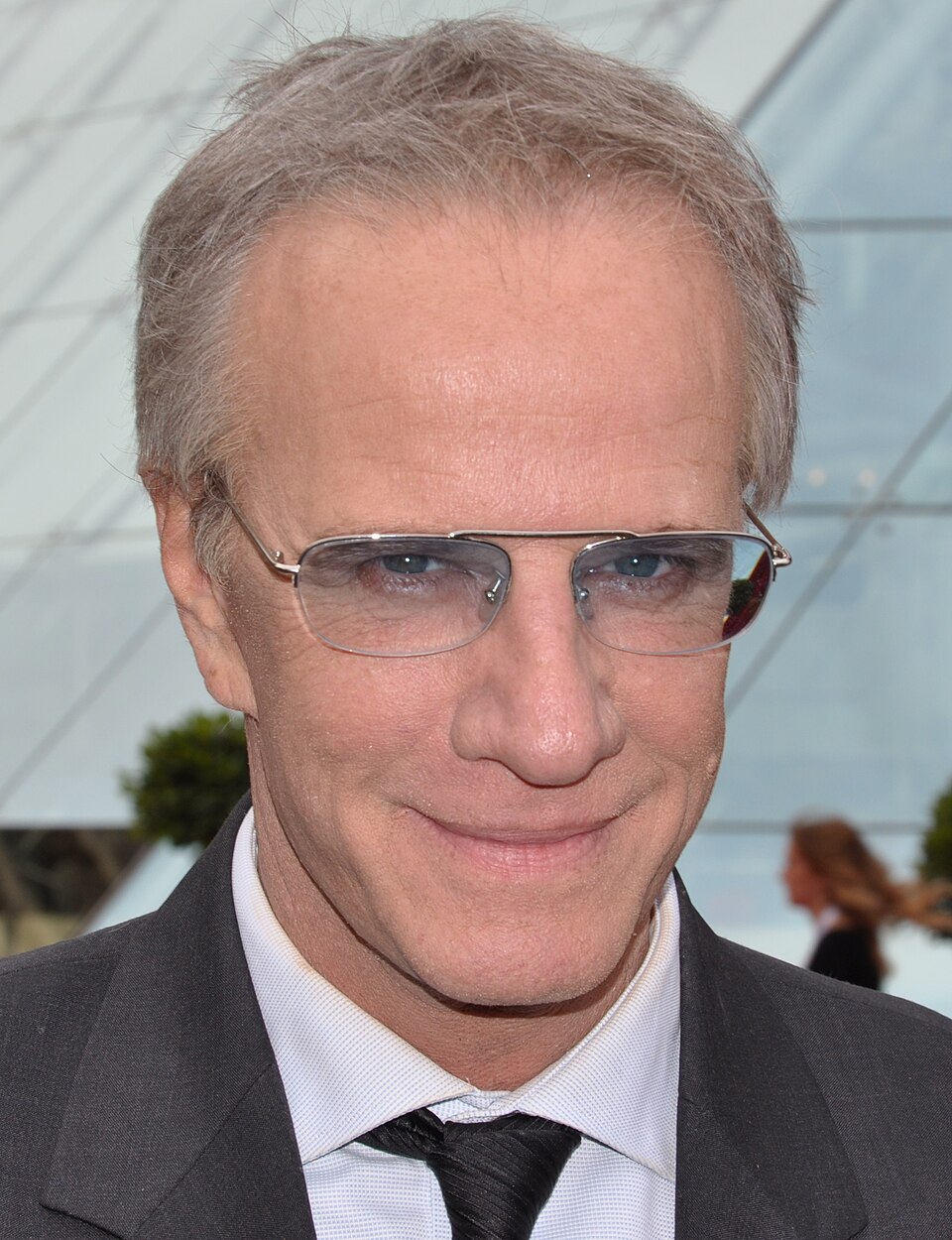
Born 1957: Christopher Lambert's Path to Highlander Fame
When reflecting on the luminaries of cinema whose performances have transcended borders and generations, the name Christopher Lambert invariably springs to mind. Known globally for iconic roles that range from the feral majesty of Tarzan to the immortal sword-wielding Connor MacLeod, Lambert's career is a testament to versatility and a captivating screen presence. While his most famous characters might suggest an American upbringing, the actor possesses a far more intricate, internationally-rooted background. Delving into his origins reveals a fascinating journey that began in the United States but was profoundly shaped by European culture, ultimately paving his unique path to becoming a cinematic legend.
For those curious to know precisely wann ist Christopher Lambert geboren (when was Christopher Lambert born) and how his early life influenced his acting career, the answer lies in a blend of diplomatic postings, cultural immersion, and an unyielding passion for performance. Born in the spring of 1957, Lambert's formative years were a kaleidoscope of experiences that forged the charismatic individual we know today.
The Formative Years: A Diplomat's Son Born in 1957
The story of Christopher Lambert begins on March 29, 1957, when he was born as Christophe Guy Denis Lambert in Manhasset, Great Neck, New York. While his birthplace might suggest an American identity, Lambert's heritage is distinctly French. His father, Georges Lambert Lamond, was a French diplomat serving the United Nations, a posting that brought the family to American soil. This unique circumstance meant that although he drew his first breath in the U.S., his roots and identity were firmly planted in French culture from birth.
Just two short years after his arrival, the Lambert family relocated back to Europe, settling in the French-speaking part of Switzerland, specifically Geneva. It was in this picturesque, international city that the young Christophe spent his childhood, immersing himself in European languages and traditions. This early exposure to a multicultural environment would prove invaluable, granting him a nuanced understanding of different cultures that would later inform his diverse roles. As he transitioned into his teenage years, the family moved once more, this time to the vibrant artistic hub of Paris. It was in the French capital that Lambert would begin his formal training as an actor, embarking on a journey that, interestingly, defied his father's initial insistence on a military career. His unique background as an American-born Frenchman, raised in Switzerland and educated in Paris, truly highlights the global nature of his beginnings. To understand more about this blend of heritage, explore Christopher Lambert: When Was He Born and His French Roots?, which details the fascinating interplay of his American birth and profound French identity.
From French Cinema to Hollywood's Spotlight
Before his name echoed in Hollywood, Christopher Lambert honed his craft in the French film industry, often credited under his birth name, Christophe Lambert. His early career saw him taking on a variety of supporting roles, building a foundation of experience and versatility that would soon catch the eye of international casting directors. These initial ventures into acting, primarily in French productions, allowed him to experiment with different characters and styles, preparing him for the grandeur of his future roles.
The pivotal moment that launched him onto the global stage arrived in 1984 with the Hollywood production of Greystoke: The Legend of Tarzan, Lord of the Apes. This ambitious film cast Lambert in the challenging titular role, requiring not just physical prowess but also a raw, untamed humanity. It was for this role that he adopted the anglicized "Christopher," marking his official entry into the English-speaking film world. His portrayal of Tarzan earned him international recognition, showcasing his unique ability to convey emotion and character even through minimal dialogue.
The success of Greystoke was swiftly followed by another critical triumph in 1985: Luc Besson's French masterpiece, Subway. For his compelling performance in this film, Lambert was awarded the prestigious César Award for Best Actor, France's equivalent of the Academy Award. This accolade cemented his status as a serious actor in his homeland, proving his artistic merit beyond his growing international fame. His journey from a childhood split between continents to becoming a celebrated actor exemplifies a truly global career path. For a deeper dive into his dual nationality and its significance, read Christopher Lambert's Birth: American Origins, French Nationality.
Highlander: Achieving Immortality on Screen
While Greystoke opened the door to international recognition and Subway solidified his critical acclaim, it was the cult classic Highlander in 1986 that propelled Christopher Lambert into cinematic immortality. The film introduced audiences to Connor MacLeod, an immortal warrior from the Scottish Highlands, who discovers his true nature after a fatal blow. Lambert’s portrayal of MacLeod, an individual burdened by centuries of life and loss, yet driven by an indomitable spirit, resonated deeply with viewers. The film’s tagline, "There can be only one," became an iconic phrase, intrinsically linked to Lambert and the enduring legacy of the franchise.
Preparing for the role of Connor MacLeod demanded immense dedication. Lambert underwent rigorous training in the art of sword fighting, a skill he mastered to convincingly wield the katana that became synonymous with his character. His commitment to authenticity brought a raw energy and believability to the high-stakes duels that defined Highlander. The film's unique blend of fantasy, action, and timeless romance, coupled with Queen's unforgettable soundtrack, created a cinematic phenomenon. It wasn't just a movie; it was a cultural event that established a devoted fanbase that continues to thrive decades later.
The success of Highlander led to several sequels, with Lambert reprising his role as Connor MacLeod in Highlander II: The Quickening, Highlander III: The Sorcerer (also known as The Final Dimension), and briefly in Highlander: Endgame. While the sequels garnered mixed critical reception, Lambert's commitment to the character remained unwavering, solidifying Connor MacLeod as one of cinema's most enduring figures. His ability to embody such an otherworldly character, making him relatable despite his immortal status, speaks volumes about Lambert's talent and unique screen presence. For aspiring actors, Lambert’s dedication to mastering a specialized skill like sword fighting for a role serves as a powerful lesson in the importance of immersion and commitment to character development.
Beyond Connor MacLeod: A Diverse Filmography
Despite the shadow of Connor MacLeod, Christopher Lambert proved his versatility by taking on a wide range of roles across various genres. Following the initial success of Highlander, he continued to star in a string of notable films that showcased his dramatic range and action hero capabilities. In 1987, he starred in Michael Cimino's crime drama The Sicilian, playing the real-life bandit Salvatore Giuliano. The following year, he tackled a more somber role in the historical drama To Kill a Priest (1988), portraying a priest during the rise of the Solidarity movement in Communist Poland.
The early 1990s saw Lambert continue to experiment with thrillers. His performance in Knight Moves (1992), a psychological thriller where he played a chess grandmaster embroiled in a murder mystery, was particularly well-received, marking another significant cinematic success. He also ventured into popular culture with roles in adaptations of video games, most notably as Lord Raiden in the 1995 film adaptation of Mortal Kombat, further expanding his reach to a younger audience and cementing his status as a genre icon.
Beyond acting, Lambert has also explored other facets of the creative industry. He has delved into producing and has even authored novels, demonstrating a multifaceted talent that extends beyond the screen. His career also saw him join action franchises, appearing as the main villain in Kickboxer: Retaliation, a sequel to Kickboxer: Vengeance, alongside martial arts legends and contemporary stars. This later role, featuring an ensemble cast including Jean-Claude Van Damme, Ronaldinho, Mike Tyson, and Hafþór Júlíus Björnsson, highlighted his enduring appeal and willingness to engage with diverse cinematic projects. Lambert’s career trajectory is a testament to an actor who consistently sought out roles that challenged him, refusing to be typecast and always eager to explore new artistic territories.
The Enduring Legacy of Christopher Lambert
Christopher Lambert, born in 1957, has carved out a distinctive and enduring legacy in the annals of film history. His unique blend of rugged charm, intense gaze, and a subtle vulnerability has captivated audiences for decades. From his early days as Christophe in French cinema to his international superstardom as Christopher, his journey has been one of constant evolution and impressive resilience. He is not merely an actor who delivered memorable performances; he is a cultural touchstone, particularly for a generation that grew up with the mystique of Connor MacLeod.
His dual heritage, being born in America but steeped in French culture, has undoubtedly contributed to his enigmatic screen presence and his ability to seamlessly transition between different national cinemas. Lambert's career is a fascinating study of an actor who embraced the challenges of a globalized industry, overcoming language barriers and cultural differences to achieve universal recognition. His dedication to his craft, evident in the meticulous preparation for roles like Connor MacLeod, speaks volumes about his professionalism and commitment to delivering authentic performances.
In conclusion, Christopher Lambert’s path to Highlander fame is a rich tapestry woven with international experiences, dedicated craft, and an unwavering commitment to his art. Born on March 29, 1957, in New York, his life’s journey took him from diplomatic family movements across continents to the grand stages of French and Hollywood cinema. He is an actor who not only portrayed unforgettable characters but became one himself – a symbol of cinematic immortality, a testament to the power of cross-cultural artistry, and a true icon of his generation. His story continues to inspire, reminding us that true talent knows no borders, and a passionate heart can conquer any challenge on the way to becoming a legend.